



Leading us into Huổi Thanh 1 village, Nậm Kè commune, Lương Thị Hiền, a commune official, proudly introduced the traditional weaving craft of the Sán Chỉ ethnic people. “Although social life has changed greatly, the weaving craft has still been preserved by some families in the village. Elderly people with experience still find time to make household items, while also teaching their children and grandchildren every small technique so that the traditional craft is not lost,” said Hiền.
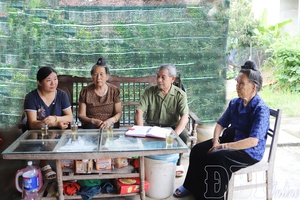
In the wooden stilt house of Đặng Văn Sén’s family, the sound of conversation among children and grandchildren is often lively on weekends. The familiar living space has become a place where generations sit together, with the elderly guiding and the young learning to split bamboo strips and weave baskets, fish baskets, brooms, and other farming and production tools. Although his hands bear the marks of time, every movement of Sén remains agile and skilled.
From selecting materials, splitting bamboo, shaving strips, to weaving the product into shape, every step is performed carefully by him. For Sén, the weaving craft is precious capital passed down by his ancestors, and so continuing to teach it to the younger generation is also a way to preserve the cultural values of his ethnic group.
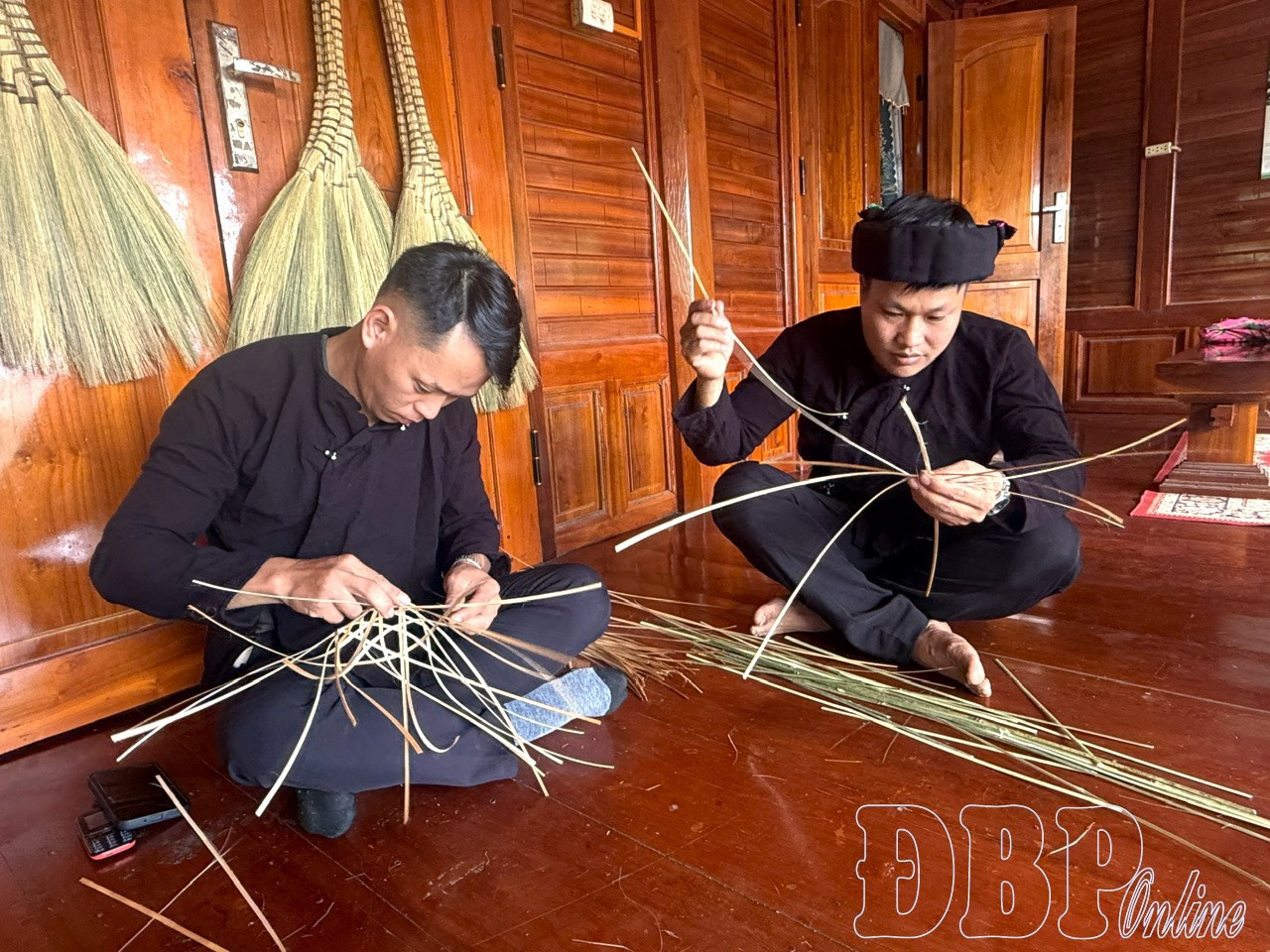
“The traditional weaving craft of the Sán Chỉ ethnic people has been passed down from previous generations, from grandparents and parents to us. I myself learned the craft from my father, from weaving baskets and fish baskets to everyday utensils. Now that I know it, I pass it on to my children and grandchildren, so the next generation can continue making it, preserving the traditional craft and the identity of our ethnic group,” Sén shared.
To date, Huổi Thanh 1 village has about 10 people who know and maintain the weaving craft. Some products such as fish baskets, brooms, and woven tools for fishing have been made and sold on the market, with some products favored by consumers.
As one of the young people interested in the ancestral craft, Bàn Văn Hòa of Huổi Thanh 1 village often visits the homes of elderly villagers to learn weaving. “I want to learn weaving so that in the future I know how to make it and pass it on to my children and grandchildren. The older generations with experience instruct the younger generation. On weekends, when I have time, I sit with the elders, guided on how to weave, and how to make the products beautiful and durable,” Hòa shared.
From familiar materials such as bamboo, bamboo shoots, and rattan, the Kháng ethnic people of Pú Nhung commune preserve their traditional weaving craft. Skilled hands have created products such as carrying baskets, rim baskets, and many household and production tools. Each product has its own distinctive weaving techniques, design, and uses, reflecting the community’s adaptation to natural conditions and living customs through many generations.
However, faced with the development of industrial products, the traditional rattan and bamboo weaving craft faces considerable difficulties. Demand for certain handcrafted household items has decreased, while finding a stable market for handcrafted products has not been truly favorable. The young labor force tends to choose work that provides more regular income, making it difficult to maintain the craft and pass on techniques.
Faced with this reality, Pú Nhung commune coordinates with artisans and residents to find solutions to preserve and develop the weaving craft in ways suitable to current demand. “The locality identifies residents and artisans as the core force in preserving traditional crafts. Therefore, the commune focuses on encouraging artisans to continue teaching techniques to younger generations. At the same time, it coordinates to organize activities to support training, improve skills, and research designs for new products to meet consumer tastes,” said Nguyễn Văn Bách, Chairman of the People’s Committee of Pú Nhung commune.
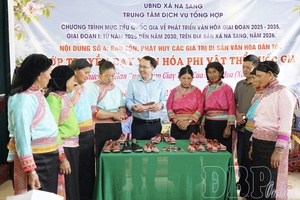
Currently, in the province, some traditional handicrafts are being preserved and passed down by ethnic communities. From brocade weaving of the Thái, Hmông, and Lào ethnic peoples to ethnic musical instrument making, handicraft production, and crafts associated with living customs and production, each craft contains knowledge and experience accumulated over many generations.
According to statistics, the province currently has over 50 traditional crafts, craft villages, and traditional craft villages, spread across many fields such as brocade weaving, rattan and bamboo weaving, ethnic musical instrument making, and handicraft production and processing. Among the province’s 22 national intangible cultural heritages, 8 belong to the category of traditional handicrafts.
According to Nguyễn Hoàng Hiệp, Deputy Director of the Department of Culture, Sports and Tourism, for traditional crafts to be preserved and promoted over the long term, it is important to maintain the passing down within ethnic communities, especially between generations within each family, clan, and village. Artisans and those knowledgeable in the craft continue to guide, teach techniques, experience, and trade secrets to younger generations, helping young people understand, appreciate, and be aware of continuing the heritage of their ancestors.
Amid the pace of modern life, preserving traditional crafts means conserving cultural values nurtured over many generations. For traditional crafts to continue to be maintained and promoted, the joint effort of the community, the attention of all levels and sectors, and solutions appropriate to market needs are essential. When traditional crafts are passed down and developed in connection with tourism and services, they will have more opportunities to spread, both contributing to preserving the cultural identity of ethnic groups and creating livelihoods and improving income for the people of Điện Biên.
Phạm Quang





You have 500/500 characters left
Please enter 5 or more characters!!!